logo

รายละเอียดสินค้า

Created with Pixso. บ้าน Created with Pixso. ผลิตภัณฑ์ Created with Pixso.
ไจโรไฟเบอร์ออปติก
Created with Pixso.

High Precision Angular Rate Sensor Fizoptika VG910 Replacement

High Precision Angular Rate Sensor Fizoptika VG910 Replacement

ชื่อแบรนด์: Firepower
เลขรุ่น: MFOG-910
MOQ: 1
ราคา: 700$
เงื่อนไขการจ่ายเงิน: L/C, D/A, D/P, T/T ตะวันตกสหภาพ
ความสามารถในการจําหน่าย: 500/เดือน
ข้อมูลรายละเอียด
สถานที่กำเนิด:
จีน
อัตราเชิงมุมสูงสุด:
±240°/วินาที
ความมั่นคงอคติ:
≤0.8°/h
ความสามารถในการทำซ้ำได้เป็นศูนย์:
≤0.8°/h
ค่าสัมประสิทธิ์การเดินสุ่ม:
≤0.02°/√ชม.
แรงดันไฟฟ้า:
+5V
ประเภทเอาต์พุต:
อนาล็อก
ความกว้างของแถบ:
≥1000Hz
มิติ:
82 มม. × 82 มม. × 19.5 มม
รายละเอียดการบรรจุ:
กล่อง+ฟองน้ำ
สามารถในการผลิต:
500/เดือน
คำอธิบายผลิตภัณฑ์

Product Description


The MFOG-910 micro-nano fiber optic gyroscope is a high-performance angular rate sensor utilizing the Sagnac effect. With a compact design (82mm × 82mm × 19.5mm) and lightweight (≤150g), it is perfect for attitude control in aerospace and defense applications. Its robust performance includes a range of ±240°/s and a zero-bias stability of ≤0.8°/H.


This product is mainly composed of optical path components, circuit components and structural components. It has the characteristics of simple structure, no moving parts, no wear parts, fast start, small size, light weight and so on. And can be apply to that attitude control and measurement of the carrier.


Composition

The product is mainly composed of the following components:

A) an optical path assembly;

B) Detection and control signal circuit board;

         C) Optical fiber ring skeleton, shell and other structural parts


Main Performance


Serial number

Project

Performance indicators

1

Range (°/s)

±240

2

Scale factor (mV/ o /s)

47±5

3

Scale factor nonlinearity (ppm)

≤1000

4

Zero-bias stability (10s, 1σ, o /H)

≤0.8

5

Zero-bias repeatability (1σ, o /H)

≤0.8

6

3dB Bandwidth (Hz)

≥1000

7

Random walk ( o /√ H)

≤0.02

8

Power supply (V)

5+0.25

+12

9

Power Consumption (W)

≤1.5

10

Impact (g)

≥1500

11

Acceleration (g)

≥70

12

Life (years) (calculated assessment)

≥15

13

MTBF (Calculated Assessment)

≥100000


Outline Drawing


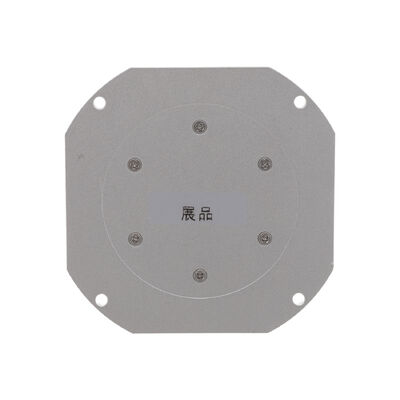
High Precision Angular Rate Sensor Fizoptika VG910 Replacement 0

Applications

The MFOG-910 fiber optic gyroscope is widely used in navigation, stabilization, and attitude measurement systems.

Typical applications include:

  • Unmanned Aerial Vehicles (UAVs)

  • Autonomous navigation systems

  • Marine navigation and stabilization

  • Robotics and intelligent vehicles

  • Antenna stabilization platforms

  • Electro-optical tracking systems

  • Inertial navigation systems (INS)

  • Unmanned ground vehicles (UGV)

  • Industrial motion control systems


Fizoptika VG910 Replacement

The MFOG-910 is designed to provide equivalent or superior performance compared to the Fizoptika VG910 fiber optic gyroscope.

Advantages include:

  • Comparable bias stability and random walk performance

  • Compatible angular rate measurement range

  • Compact and lightweight structure

  • Improved supply stability and reliability

  • Cost-effective alternative solution

This makes the MFOG-910 an excellent choice for customers seeking a reliable replacement for Fizoptika VG910 in inertial navigation and stabilization applications.


MFOG-910 vs VG910H1

Parameter VG910H1 Fiber Optic Gyroscope MFOG-910 Micro-Nano Fiber Optic Gyroscope
Angular Rate Range (°/s) 250 ±240
Bias Stability (RMS, °/h) 1 ≤0.8
Angle Random Walk (°/√h) 0.015 ≤0.02
Bandwidth (kHz) 1 ≥1
Scale Factor Stability / Repeatability (RMS, %) 0.02 ≤0.1
Start-up Time (s) 0.03 Fast start
Power Consumption (W) 0.5 ≤1.5
Dimensions (mm) 82 × 82 × 20 82 × 82 × 19.5
Weight (g) 150 ≤150
Operating Temperature (°C) −40 ~ +70 −40 ~ +70
Storage Temperature (°C) −55 ~ +85 −55 ~ +85
Vibration (RMS, 0.02–2 kHz, g) 30 20
Shock (g, 1 ms) 1200 ≥1500
MTBF (20°C) 100000 h ≥100000 h
Lifetime 15 years ≥15 yea


FAQ

MFOG-910 | VG910H1 Replacement

1. What is a fiber optic gyroscope?

A fiber optic gyroscope (FOG) is a high-precision angular rate sensor based on the Sagnac effect. It measures rotation by detecting the phase difference between two beams of light traveling in opposite directions inside a fiber coil. FOG sensors are widely used in inertial navigation systems, UAVs, robotics, and stabilization platforms.


2. Can MFOG-910 replace the VG910H1 fiber optic gyroscope?

Yes. The MFOG-910 micro-nano fiber optic gyroscope is designed to provide comparable performance to the VG910H1.
It features similar angular rate range, bandwidth, size, and environmental specifications, making it suitable as a replacement in many inertial navigation and stabilization systems.


3. What are the advantages of fiber optic gyroscopes?

Fiber optic gyroscopes provide several advantages compared with mechanical gyroscopes and MEMS sensors:

  • No moving parts

  • High reliability and long service life

  • High precision and low drift

  • Strong resistance to vibration and shock

  • Wide operating temperature range

These characteristics make FOG sensors ideal for navigation and guidance applications.


4. What applications use fiber optic gyroscopes?

Fiber optic gyroscopes are widely used in:

  • UAV and drone navigation

  • Inertial Navigation Systems (INS)

  • Electro-optical stabilization platforms

  • Antenna stabilization systems

  • Autonomous vehicles and robotics

  • Marine navigation systems

  • Aerospace guidance systems

5. Why choose fiber optic gyroscopes for UAV navigation?

Fiber optic gyroscopes offer several advantages for UAV systems:

  • High precision attitude measurement

  • Fast response and high bandwidth

  • Excellent vibration resistance

  • Long-term stability during flight

These features make FOG sensors ideal for drone flight control and navigation systems.


6. How do fiber optic gyroscopes compare with MEMS gyroscopes?

Fiber optic gyroscopes generally provide:

  • Higher accuracy

  • Lower drift

  • Better long-term stability

MEMS gyroscopes are usually smaller and lower cost but are often used in lower-precision navigation systems.